Skip to content
Certainly! Here’s a detailed 750-word overview of the 1991 World Athletics Championships in Tokyo:
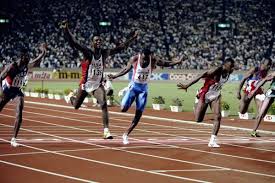
The 1991 World Athletics Championships in Tokyo: A Landmark Event
The 1991 World Athletics Championships, held in Tokyo, Japan, marked the third edition of the global track and field competition organized by the International Association of Athletics Federations (IAAF). Taking place from August 23 to September 1, 1991, this event was significant not only for the high level of athletic performance but also for its role in promoting athletics in Asia and expanding the sport’s global reach.

Background and Venue
Tokyo was selected as the host city for the 1991 championships, showcasing Japan’s growing influence in international sports. The event was staged at the National Stadium, an iconic venue originally built for the 1964 Tokyo Olympics.
The stadium’s modern facilities and large capacity provided an excellent stage for one of the biggest sporting events of the year.
This edition was important as it followed the inaugural championships in Helsinki (1983) and the second edition in Rome (1987).
By 1991, the World Championships had firmly established themselves as the premier global athletics competition, second only to the Olympic Games in prestige.

Participation and Events
The Tokyo Championships featured over 1,400 athletes from more than 160 countries, competing across 43 events—24 for men and 19 for women.
The range of disciplines included sprints, middle and long-distance races, hurdles, jumps, throws, combined events (decathlon for men, heptathlon for women), and race walks.
This widespread participation highlighted the global nature of athletics and the growing competitiveness across continents.
Athletes came prepared to challenge records and national bests, making the championships a thrilling spectacle.
Highlights and Notable Performances
The 1991 World Championships delivered memorable moments and standout performances that left a lasting impact on the athletics world:
-
Michael Johnson’s Breakthrough: One of the most memorable stories from Tokyo was the emergence of Michael Johnson from the United States.
-
Though already an Olympic gold medalist from the 1990 Goodwill Games, Johnson announced himself on the world stage by winning the 200 meters with a world-class time, foreshadowing his future dominance in sprinting.
-
Carl Lewis’s Continued Excellence: Legendary American sprinter and long jumper Carl Lewis continued his remarkable career by winning gold in the 100 meters and anchoring the US 4×100 meters relay team to victory.
-
Lewis’s performances reinforced his status as one of the greatest athletes in track and field history.
-
Heike Drechsler’s Dominance: Representing Germany, Heike Drechsler claimed gold in the women’s long jump and 200 meters, showcasing her versatility and power. Drechsler’s wins were a highlight for the German team, contributing significantly to their medal haul.
-
David Ovett’s New Star: In the men’s middle-distance races, the emergence of new talents created intense competition.
Although the legendary British runner Steve Cram did not compete, other athletes vied fiercely for the podium, marking a transition in middle-distance running.
-
Kenny Harrison’s Triumph: In the men’s triple jump, American Kenny Harrison won gold with a remarkable performance, highlighting the strength of US field athletes.
-
Sally Gunnell’s Sprint Hurdles Success: British athlete Sally Gunnell earned gold in the women’s 400 meters hurdles, establishing herself as a top competitor and inspiring a new generation of hurdlers.
-
World Records and National Records: While no world records were shattered, several championship and national records were set, emphasizing the competitive atmosphere and high caliber of the event.
Women’s Athletics Progress
The Tokyo championships were particularly notable for the increased prominence of women’s events.
By 1991, women’s participation had grown significantly, reflecting global efforts toward gender equality in sport.
The competition witnessed thrilling performances across all women’s disciplines, with athletes like Heike Drechsler and Sally Gunnell leading the way.
The women’s 10,000 meters race was also a highlight, with tough competition among athletes from Africa, Europe, and North America, signaling the rising depth and diversity in long-distance running for women.
Impact and Legacy
The 1991 World Athletics Championships left a profound legacy for both the sport and Tokyo as a host city:
-
Promotion of Athletics in Asia: Hosting such a large-scale event helped to popularize athletics in Japan and across Asia.
It laid groundwork for future sporting events, including the 1993 World Championships in Stuttgart and the eventual 2020 Tokyo Olympics.
-
Technological and Organizational Advances: The championships showcased advances in sports technology, timing systems, and broadcast coverage, enhancing the spectator experience worldwide. Japan’s meticulous organization set high standards for future hosts.
-
Inspiration for Future Athletes: The event inspired many young athletes globally, particularly in Asia, to take up athletics seriously, boosting the sport’s grassroots development.
-
Geopolitical Context: Coming just before the dissolution of the Soviet Union and major changes in Eastern Europe, the championships were one of the last major global competitions where athletes competed under old national flags, adding historical significance.
Medal Table and Dominant Nations
The United States led the medal table with a commanding presence, followed by Germany, the Soviet Union, and Cuba.
These nations showcased their depth across sprints, jumps, throws, and distance events.
The Soviet Union was still a powerhouse but would soon see its athletes compete under different banners after the country’s breakup in late 1991.
The 1991 World Athletics Championships in Tokyo was a landmark event in the history of athletics.
It combined elite performances, global participation, and top-level organization to produce a memorable celebration of sport.
The competition not only highlighted the incredible talents of the time but also helped to spread the appeal of athletics across Asia and the world.
Athletes like Michael Johnson, Carl Lewis, Heike Drechsler, and Sally Gunnell made their mark in Tokyo, while the championships themselves strengthened the role of the World Athletics Championships as the pinnacle of international track and field competition outside the Olympics.
Tokyo 1991 remains a key chapter in the story of athletics, symbolizing a moment of transition, growth, and international unity through sport.
If you’d like, I can also help with more specific details, such as medal counts, athlete biographies, or individual event summaries! Would you like that?